

Key Takeaways
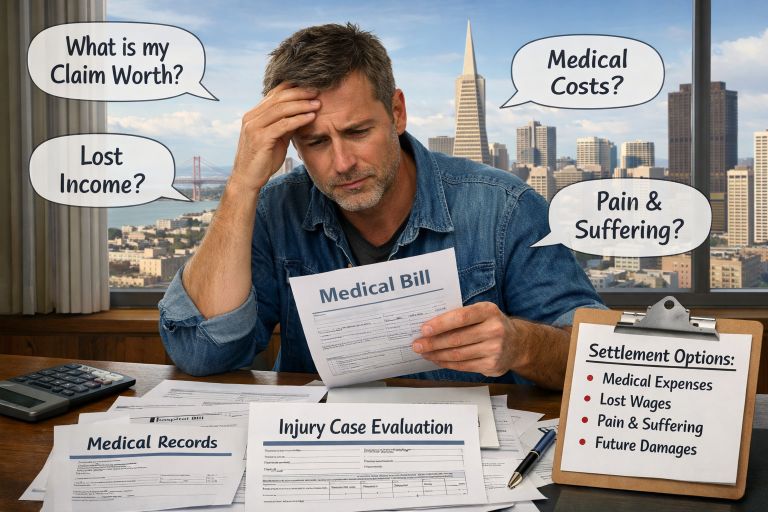
- The value of a personal injury case in San Francisco depends on factors like medical expenses, lost income, pain and suffering, and liability.
- California law limits the time you have to file a claim, so acting quickly is crucial.
- Comparative negligence rules may affect your final settlement depending on your role in the accident.
- Insurance policy limits can cap the total amount you receive, even if your damages are higher.
- Consulting a qualified attorney can help ensure all damages are properly accounted for in your claim.
Table of Contents
- Factors That Affect Your Personal Injury Case Value
- Types of Damages You Can Recover
- California Laws Impacting Compensation
- Insurance Policy Limits and Their Role
- Steps to Take After an Injury in San Francisco
- Why Consulting an Attorney Matters
- Frequently Asked Questions
If you have suffered an injury because of someone else’s negligence in San Francisco, you are probably wondering: “How much is my personal injury case worth?” Calculating the value of a personal injury claim is a complex process, influenced by several important factors including the type of injury, medical costs, lost wages, and pain and suffering. Getting an accurate valuation requires a clear understanding of how these elements play into San Francisco’s legal landscape and what you can expect along the way. You can learn more and explore your unique situation by visiting this website.
Whether your injury is the result of a car accident, slip and fall, or another type of incident, each case is unique and must be evaluated independently. Understanding your rights and the steps to take after an accident can greatly impact your potential compensation. The goal of a personal injury claim is to restore you as much as possible to your pre-injury state, which means careful examination of both financial and emotional damages you have experienced.
Factors That Affect Your Personal Injury Case Value
The value of a personal injury claim can vary greatly based on the specifics of your situation. Major factors include the severity of your injuries, the amount of current and future medical expenses, lost wages, loss of earning capacity, and the impact of the injury on your quality of life. Non-economic damages like pain and suffering are also factored in, although they can be harder to quantify objectively. The clarity of liability and the degree to which the other party was at fault will also play a central role in determining your claim’s worth.
Types of Damages You Can Recover
Personal injury damages fall into two broad categories: economic and non-economic. Economic damages cover measurable losses such as medical bills, rehabilitation costs, lost income due to missed work, and any future loss of earning ability. Non-economic damages include pain and suffering, emotional distress, and reduced quality of life. In cases involving egregious misconduct, you may also be entitled to punitive damages that punish the responsible party and deter future negligence. For an in-depth explanation of damages, you can refer to this resource from Justia.
California Laws Impacting Compensation
Several state laws influence your recovery amount in San Francisco. California’s “pure comparative negligence” rule means your compensation can be reduced according to your degree of fault. For example, if you’re found to be 30% responsible for the accident, your award is reduced by that percentage. Additionally, the statute of limitations for most personal injury claims is two years from the date of the injury, meaning you must act before this period expires or risk losing your right to file a lawsuit. Knowing these laws is key to ensuring a fair settlement.
Insurance Policy Limits and Their Role
Even if you have substantial damages, your compensation may be limited by the at-fault party’s insurance policy limits. Insurance companies generally pay damages up to their client’s coverage limits. If your damages exceed these limits, additional recovery might only be possible by pursuing action against the defendant’s personal assets, which can be a difficult and uncertain process. Navigating insurance nuances often requires a strategic approach to maximize compensation.
Steps to Take After an Injury in San Francisco
After an injury, your actions can significantly affect your case. Seek medical attention immediately, both for your health and to document your injuries. Gather evidence at the scene, such as photographs, witness contact information, and an official record of what happened. Promptly report the incident to relevant parties, like property owners or law enforcement. Consulting a medical professional also ensures that your injuries and treatment are thoroughly documented, a critical factor when negotiating a settlement with insurance companies or in court.
Why Consulting an Attorney Matters
Enlisting the help of a qualified personal injury attorney can make a profound difference in the outcome of your case. Attorneys have experience evaluating claims, negotiating with insurance companies, and presenting strong cases in court. They know how to uncover hidden damages that you might overlook on your own, ensuring you are fully compensated for your injuries and losses. For guidance on choosing the right legal professional, consider reviewing this legal guide from AllLaw.
Frequently Asked Questions
Can I still recover damages if I was partly at fault?
Yes. Because California follows pure comparative negligence laws, you can recover damages even if you were partially at fault, though the compensation will be reduced by your share of responsibility.
How long will my personal injury case take to settle?
The timeline can vary widely depending on the complexity of your case, the clarity of liability, and whether the case is settled pre-trial or goes to court. It can take several months or possibly years for more complicated cases.
Will my case go to trial?
Most personal injury cases settle out of court. However, if an agreement cannot be reached or the insurance company refuses a fair settlement, your attorney may advise pursuing your case at trial.
If you are considering pursuing a claim, remember that an early consultation can protect your rights and give you a stronger footing throughout the legal process. By being informed and proactive, you give yourself the best chance at fair compensation for your losses.