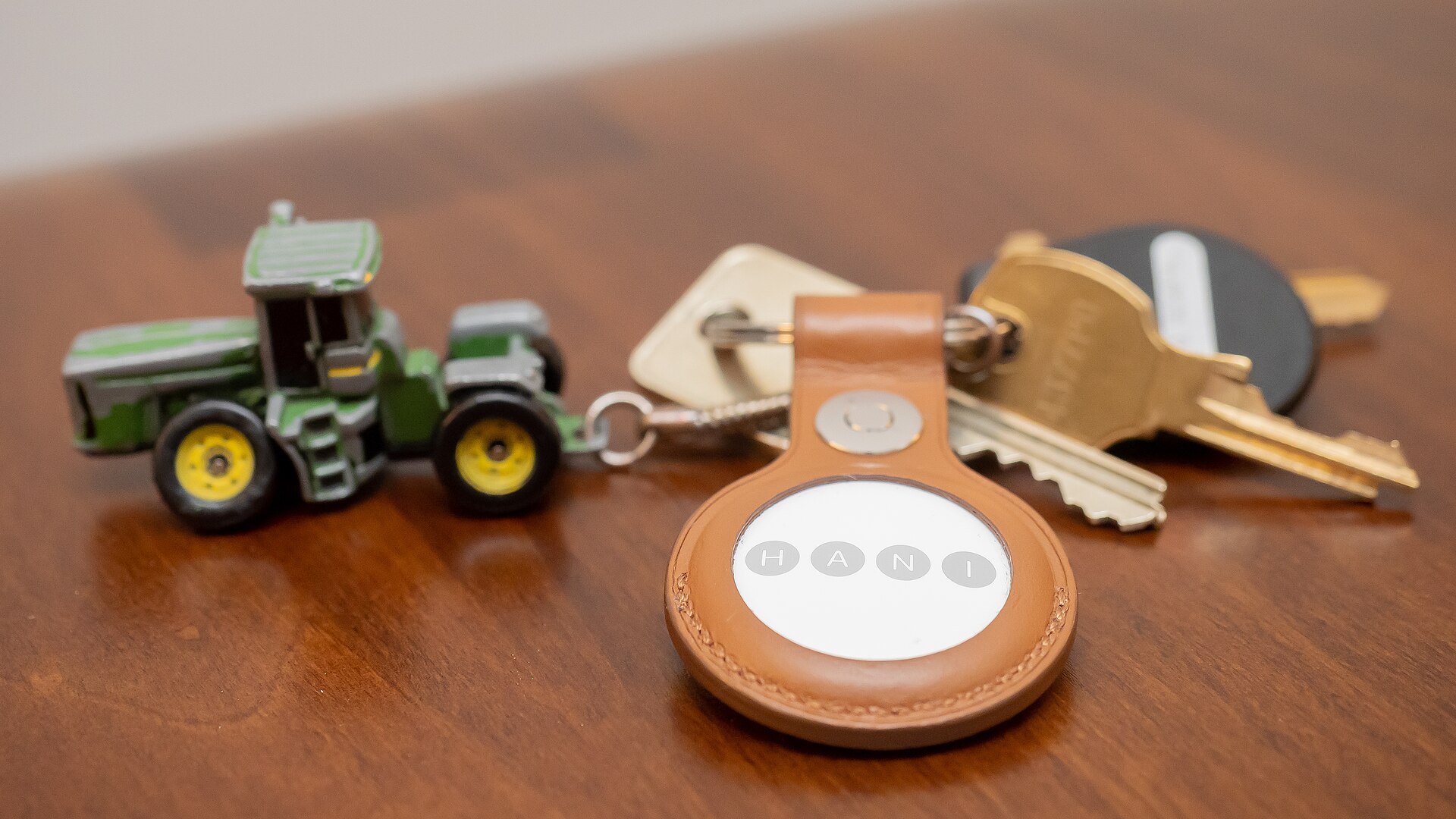
Google’s own item tracker is finally here. The Google Pixel Tag went on sale in the U.S. on Nov. 10, 2026, for $29.99, or $99.99 for a four-pack. (Google’s November Pixel Drop post lists Nov. 11 as the availability date.) It works with almost any Android phone running Android 9 or later, uses Google’s Find Hub network of more than a billion Android devices, and runs on a coin-cell battery you can swap yourself. It does not work as a tracker for iPhone owners.
Below is what the Pixel Tag does, which phones get the best features, how it compares to Apple’s AirTag 2, and what to know before you buy one.
Pixel Tag price and availability
Google first showed the Pixel Tag in August alongside the Pixel 11 phones. According to The Verge and TechCrunch, it launched on Nov. 10 at these prices:
- One Pixel Tag: $29.99
- Four-pack: $99.99 (about $25 per tag)
Google’s official spec page lists a single color, Fog, a pale green that matches the Pixel 11 Pro. The tag doesn’t come with a keyring loop or case, so plan on buying a holder. Bellroy is selling keychain cases for it on the Google Store. Since the launch lands just ahead of the holiday sales, it’s worth checking our Black Friday 2026 sale dates guide before paying full price for a four-pack.
What the Pixel Tag does
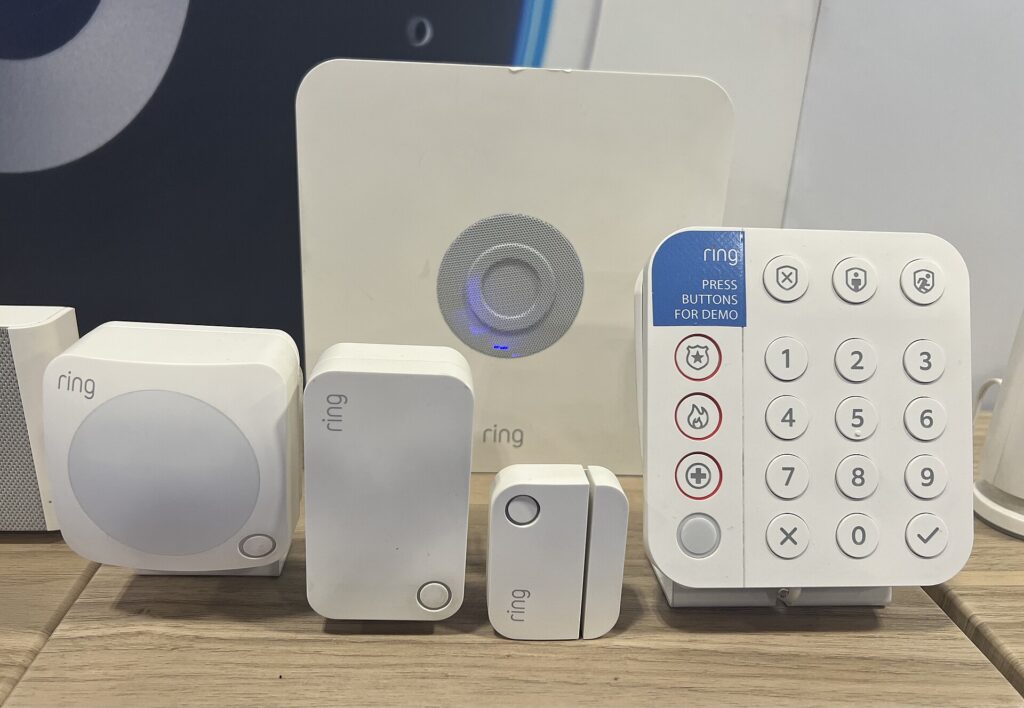
The Pixel Tag works much like other Bluetooth trackers. You attach it to keys, a wallet, a bag or luggage, and it shows up in the Find Hub app on your phone. Amazon’s Ring announced another new gadget the same week: the Ring Drone Cam, which flies around your home to check on alerts.
Finding things far away
When the tag is out of range, it relies on Find Hub’s crowdsourced network. Passing Android phones detect the tag and report its location back to you. Google says the network spans more than one billion Android devices. Google also says network location data is end-to-end encrypted, so only you and the people you share with can see where the tag is.
That network works best in busy places. In Android Authority’s hands-on test, the reviewer got a “left behind” alert within five minutes of dropping keys downtown. In a quiet wooded trailhead, though, the last reported location was only a nearby neighborhood, and he had to get back within Bluetooth range to find the keys.
Finding things nearby
Once you’re close, Find Hub’s “Find nearby” view takes over. The tag supports two precision features:
- Ultra Wideband (UWB): On phones with a UWB chip, Find Hub shows an arrow plus the exact distance to the tag.
- Bluetooth Channel Sounding: On phones that support Bluetooth 6.0 Channel Sounding, you get a more accurate distance readout, but not direction, according to The Verge.
Older phones without either feature can still ring the tag and see it on a map. They just won’t get the guided, step-by-step finding.
Sound, button and NFC
The tag has a built-in speaker with three volume levels, topping out around 80 decibels, per TechCrunch. Unlike Apple’s AirTag, it also has a physical button: double-press it to make your phone ring if you’ve lost the phone instead of the keys. Tapping your phone on the tag uses NFC to open its settings in Find Hub, and someone who finds a tag in Lost mode can tap it to see the contact details you chose to share.
Pixel Tag specs at a glance
These figures come from Google’s spec page:
- Size: 28 mm wide, 46.1 mm tall, 5.4 mm thick (1.1 x 1.8 x 0.2 inches)
- Weight: 11.8 g (0.4 oz) with battery
- Durability: IP67, rated for up to 1 meter of water for 30 minutes
- Battery: user-replaceable CR2032 coin cell, rated for over a year
- Connectivity: Bluetooth Channel Sounding and Ultra Wideband
- Other: built-in speaker and accelerometer
- Compatibility: Android 9 and later
Android Authority notes the battery cover twists off by hand with no tools, and Find Hub will remind you every two weeks once the battery runs low.
Pixel Tag vs. AirTag 2
The simplest rule: buy the tracker that matches your phone. The Pixel Tag works with Android’s Find Hub, and Apple’s AirTag works with the Find My app on iPhone. Here’s how they line up on paper:
- Price: Apple’s second-generation AirTag, released in January 2026, costs $29 or $99 for a four-pack, according to 9to5Mac. The Pixel Tag is $29.99 or $99.99. MacRumors reported the AirTag 2 four-pack dropping to $69.99 at Amazon and Best Buy in late October, so AirTag deals already exist. The Pixel Tag is brand new and full price for now.
- Shape: The AirTag is a round puck 0.31 inches thick. The Pixel Tag is an oblong 0.2 inches thick, which makes it easier to slip into a wallet.
- Button: Only the Pixel Tag has one, which lets you ring your phone from the tag.
- Battery: Both use a replaceable CR2032 cell and are rated for more than a year.
- Water resistance: Both are IP67.
If you already own a Find Hub tracker from Pebblebee, Motorola or another brand and it works for you, Android Authority says there’s little reason to switch. The Pixel Tag is mainly for people who want Google’s own hardware and the best UWB support on a recent Pixel or other UWB phone. iPhone users weighing a new phone, like Apple’s foldable iPhone Duo, should stick with AirTag.
Anti-stalking protections
Bluetooth trackers can be misused to follow people, so the Pixel Tag has the same kinds of safeguards as its rivals. It supports the industry Detecting Unwanted Location Trackers (DULT) standard, which means both Android phones and iPhones will warn someone if an unknown Pixel Tag separated from its owner is traveling with them. If the tag has been away from its owner for a long time and starts moving, it chimes to alert people nearby, according to Android Authority.
If you share a tag with family, say for the car keys, the people you share with won’t get unwanted-tracking alerts. TechCrunch reports you can share a tag with up to 10 people.
Is the Pixel Tag worth buying?
For Android users who don’t own a tracker yet, the Pixel Tag looks like an easy pick. It’s priced in line with AirTag, setup takes a couple of minutes with Fast Pair, the battery is replaceable, and UWB precision finding is a real help on phones that support it. Its weak spots are the single color, the lack of a built-in keyring hole, and the same limitation every crowdsourced tracker has: in remote places, few phones pass by to report its location.
It also makes a practical stocking stuffer. If you’re shopping by text or voice this season, here’s how Amazon’s text-to-shop Alexa feature works and how to avoid scam texts that imitate it.
FAQ
How much is the Google Pixel Tag?
$29.99 for one or $99.99 for a four-pack.
Does the Pixel Tag work with iPhone?
No. You need an Android phone running Android 9 or later to set up and track a Pixel Tag in Find Hub. iPhones can still alert their owners if an unknown Pixel Tag is traveling with them.
Do I need a Pixel phone?
No. Any Android 9 or newer phone works. Precise direction finding needs a phone with UWB, and more accurate distance needs Bluetooth Channel Sounding support.
What battery does the Pixel Tag use?
A standard CR2032 coin cell, which Google says lasts more than a year. You can replace it by hand.
Is the Pixel Tag waterproof?
It’s rated IP67, so it’s dust-tight and can survive up to 1 meter of water for 30 minutes. It isn’t meant for swimming or diving.
Sources: Google Pixel Tag specifications (Pixel Phone Help), Google Keyword November 2026 Pixel Drop, The Verge, TechCrunch, Android Authority, 9to5Mac and MacRumors. Prices are as listed at launch and may change during holiday sales.