Gas is averaging about $4.30 a gallon and October 2026 is on track to be the priciest October ever, per AAA. Here’s why prices are stuck high, which states pay most and least, and 9 proven ways to save.


 Kara
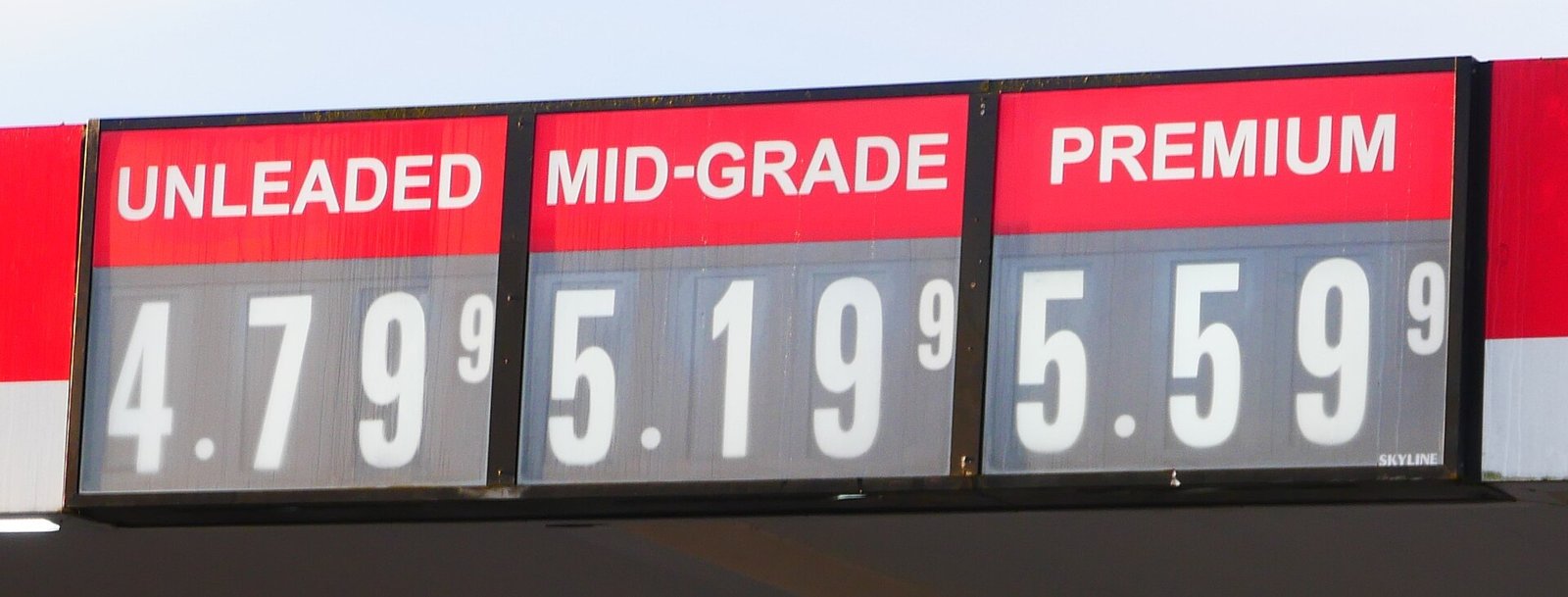
Gas prices are easing a little this fall, but not by much. AAA put the national average for regular gasoline at about $4.30 a gallon on Oct. 24, 2026, and its Oct. 22 report said this month is on track to be the most expensive October ever at the pump. The short version: cheaper winter-blend fuel is pulling prices down, while crude oil near $100 a barrel (and Brent above $110) is keeping them from falling further. Here’s what’s going on, where gas costs the most and least, and practical ways to spend less.
According to AAA’s Oct. 22 fuel report, the national average for regular was $4.27, down 6 cents in a week. Here’s how that compares:
So drivers are paying roughly $1.20 more per gallon than they were a year ago. AAA’s daily tracker showed the average at $4.2957 on Oct. 24, so the slide has stalled for now. AAA also noted that records for the most expensive month were already set in August and September of this year.
Gasoline prices follow crude oil, and crude has climbed. On Friday, Oct. 23, benchmark Brent crude touched $114 a barrel for the first time since May, while U.S. West Texas Intermediate (WTI) traded around $100, Investing.com reported via Yahoo Finance. Analysts at ING said the rally was being driven “less by current fundamentals than by mounting supply concerns.” For the latest, see whether gas prices will go down now that oil has fallen below $100.
Those concerns center on the Persian Gulf. AAA pointed to instability in the Strait of Hormuz, a key route for oil tankers. Markets have also been reacting to reports that the U.S. and Israel are weighing new strikes on Iran after the Nov. 3 midterm elections, and to continued Houthi attacks on sites in Saudi Arabia. Even when oil keeps flowing, the risk of a disruption tends to push prices up.
The recent drop at the pump comes mostly from the seasonal switch to winter-blend gasoline, which AAA says is cheaper to produce and costs less for consumers. That switch usually gives drivers a bit of relief every fall. This year, expensive crude is eating most of it.
AAA, citing Energy Information Administration data, said U.S. gasoline demand rose from 8.40 million to 8.98 million barrels a day in the latest week, while total domestic gasoline supply fell from 208.3 million to 205.3 million barrels. U.S. crude inventories dropped 3.1 million barrels to 412.5 million, about 3% below the five-year average. Higher demand plus thinner supply leaves little room for prices to fall.
Where you live makes a big difference. AAA’s Oct. 22 list of the priciest and cheapest markets for regular:
| Most expensive | Price | Least expensive | Price |
|---|---|---|---|
| California | $6.08 | North Carolina | $3.55 |
| Hawaii | $5.64 | Georgia | $3.70 |
| Washington | $5.34 | Texas | $3.76 |
| Nevada | $5.33 | Tennessee | $3.82 |
| Oregon | $4.90 | Louisiana | $3.83 |
The rest of AAA’s top 10 most expensive were Alaska, Idaho, Utah, Illinois and Michigan, all between $4.60 and $4.88. The rest of the cheapest 10 were South Carolina, Alabama, Mississippi, Indiana and Arkansas, all under $3.90.
If you drive an EV, public charging held steady at a national average of 41 cents per kilowatt hour, AAA said, ranging from 31 cents in Kansas to 54 cents in Hawaii.
You can’t control oil markets, but you can control how much fuel you buy and what you pay for it. The savings figures below come from the U.S. Department of Energy’s FuelEconomy.gov driving tips and maintenance tips, which assume gas at $4.28 a gallon, almost exactly today’s national average.
Speeding, hard acceleration and sudden braking can cut gas mileage by roughly 15% to 30% at highway speeds and 10% to 40% in stop-and-go traffic. FuelEconomy.gov says that’s worth $0.43 to $1.71 per gallon.
Mileage usually drops quickly above 50 mph. The rule of thumb: every 5 mph over 50 is like paying about 30 cents more per gallon. Slowing down by 5 to 10 mph saves an estimated 7% to 14%.
A large rooftop cargo box can lower fuel economy by 6% to 17% on the highway and 10% to 25% at interstate speeds. If you don’t need it, remove it.
An extra 100 pounds can reduce mileage by about 1%. It’s a small gain, but it’s free.
Idling burns a quarter to a half gallon of fuel per hour. If you’ll be parked for more than about a minute, turning the engine off saves money.
Holding a steady speed saves gas in most cases.
Properly inflated tires improve mileage by about 0.6% on average and up to 3% in some cases. Use the pressure on the sticker in the driver’s door jamb, not the maximum printed on the tire.
Using your manufacturer’s recommended oil grade can improve mileage by 1% to 2%, and a check engine light can signal a problem that hurts fuel economy. If you drive a diesel, our guide to diesel truck warning lights explains which ones need attention right away.
With a gap of more than $2.50 a gallon between the most and least expensive states, prices can also vary a lot between stations in the same town. AAA suggests using its TripTik Travel planner to find current gas and charging prices along your route. Store and membership programs can help too; for example, Walmart+ includes a fuel discount of up to 10 cents a gallon at participating stations.
If high gas prices have you rethinking how far you drive every day, our look at the “commuting paradox” and whether a long commute is worth it is a useful read.
Nobody can say for certain. Winter-blend gasoline has already given prices a nudge lower, but AAA says high crude prices are preventing steep declines. The bigger factor is the Middle East: whether the Strait of Hormuz stays open and whether new strikes on Iran happen. If crude stays above $100, a big drop at the pump is unlikely in the near term. If tensions ease and oil falls, pump prices usually follow, though often more slowly than they rose.
AAA’s tracker showed $4.2957 for regular on Oct. 24, 2026. Check AAA’s gas prices page for the latest number and your state’s average.
In AAA’s Oct. 22 report, North Carolina had the cheapest regular at $3.55, followed by Georgia ($3.70) and Texas ($3.76).
California, at $6.08 a gallon, followed by Hawaii ($5.64) and Washington ($5.34).
Stations switch to winter-blend gasoline, which is cheaper to make. This year, high crude prices are limiting how much prices fall.
Use the octane your owner’s manual recommends. According to FuelEconomy.gov, in most cases using a higher octane than the manual calls for offers no benefit, so paying extra for premium in a car built for regular is wasted money.
Prices in this article come from AAA reports dated Oct. 22 and Oct. 24, 2026, and change daily.