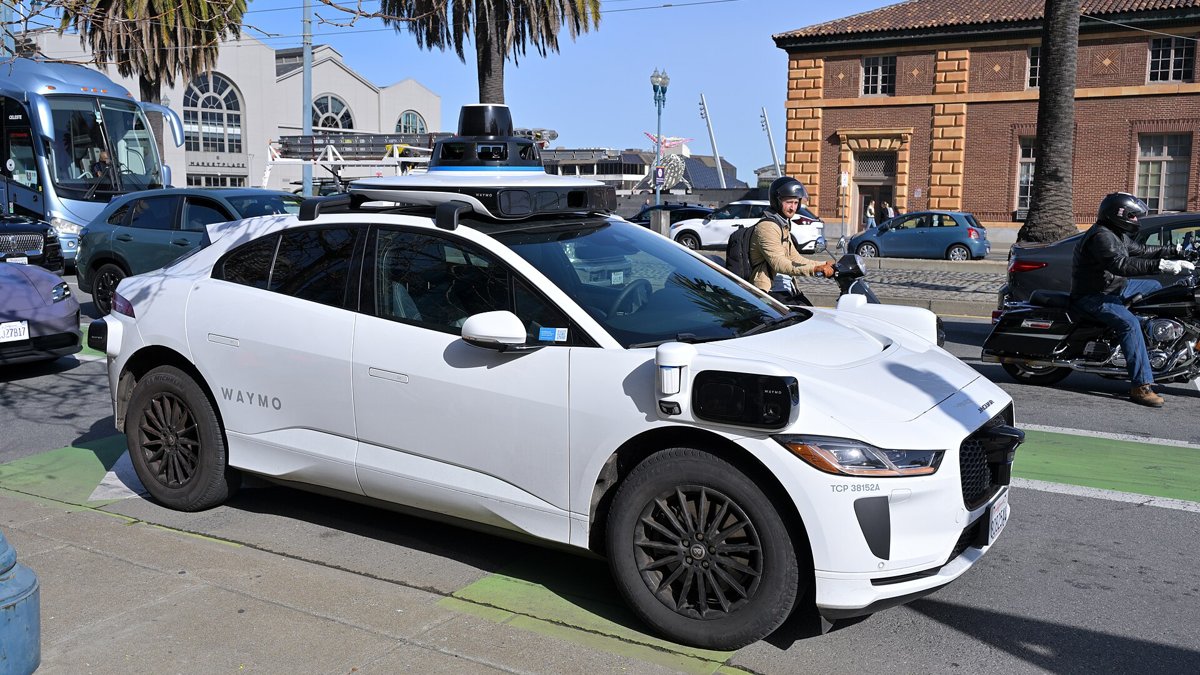
Waymo is recalling the self-driving software in 4,488 robotaxis, essentially its entire driverless U.S. fleet, after its vehicles entered closed freeway lanes 11 times since Oct. 1, including three on a single day in November. No collisions or injuries were reported in those events. For riders, the practical effect is simple: Waymo has paused freeway trips in every market it serves, California has barred its driverless cars from state freeways, and city-street rides continue as normal. There’s nothing a passenger needs to do, because Waymo owns every affected vehicle and pushes fixes over the air.
Here’s what the two new recalls cover, why California stepped in, and what changes if you use Waymo in San Francisco, Los Angeles, Phoenix, Austin, Miami or elsewhere.
What is the Waymo recall about?
Waymo filed two separate safety recalls with the National Highway Traffic Safety Administration (NHTSA) on Nov. 19, 2026, both covering its fifth- and sixth-generation Automated Driving System, the hardware and software that let its cars drive with no one behind the wheel. Reuters first reported the filings on Nov. 20, and NHTSA released the documents on Nov. 24.
Recall 26E086: closed freeway lanes
According to Waymo’s Part 573 safety recall report, a Waymo vehicle “may enter and continue driving in a closed freeway lane due to improperly recognizing and failing to avoid a closed lane.” NHTSA’s summary adds that the car could keep driving at speed. The safety risk, in the filing’s words, is that driving in a closed freeway lane “increases the potential for a collision.”
The chronology in the report lays out how the problem built up:
- Oct. 1 to Nov. 6, 2026: eight Waymo vehicles entered freeway lanes closed off by cones, highway patrol vehicles running a traffic break, or construction vehicles.
- Nov. 6: Waymo narrowed where and when its cars could drive on freeways to reduce exposure to closures.
- Nov. 9: three more Waymo vehicles entered freeway lanes coned off for construction, just three days after that change.
- Nov. 10–11: Waymo restricted autonomous freeway operation further, including temporarily halting planned commercial freeway trips.
- Nov. 12: Waymo’s Safety Board decided to issue a voluntary software recall.
The fix in place now is an interim one. Waymo says it applied operational limits to all 4,488 vehicles on Nov. 11, using trip routing changes and dynamic map updates to keep its cars away from freeway construction and lane closures. The final software remedy is still being developed. The filing lists the population as vehicles with driverless capability built between March 17, 2022, and Nov. 11, 2026, and notes it is related to an earlier recall, 26E035.
Recall 26E087: officers directing traffic
The second recall deals with intersections where police or other authorized personnel direct traffic by hand. Waymo’s report for recall 26E087 describes a May 8, 2026, collision: an officer signaled a Waymo to stop, and it did. Passing cross-traffic then blocked the officer from the car’s view, the Waymo proceeded once the intersection appeared clear, and it collided with a vehicle that emerged from behind a large obstruction.
Waymo says that was the only known collision tied to the issue. A software update addressing it was deployed to its driverless vehicles between Sept. 17 and Nov. 6, 2026, so this recall is already fully remedied across the same 4,488-vehicle fleet.
Why did California ban Waymo from freeways?
The recalls came days after California regulators acted. The California Department of Motor Vehicles issued operational restrictions on Waymo’s deployment and driverless testing permits that took effect Nov. 11, barring the company from operating or testing driverless vehicles on all California freeways, KQED reported.
The DMV cited an incident in which three Waymo robotaxis entered an active construction closure on U.S. Route 101 near Burlingame, and a separate incident involving California Highway Patrol vehicles on Highway 280 in San Francisco. In its statement, the department said Waymo’s driverless freeway operations “pose an imminent hazard to public safety due to recurring incursions by its vehicles into active construction zones,” despite earlier restrictions and corrective actions that followed similar incidents on May 18, 2026.
The ban stays in place until Waymo shows the DMV it has taken effective corrective actions, such as evidence that its vehicles can detect and respond to construction zones and emergency vehicles. Waymo told KQED it would keep testing on freeways with trained autonomous specialists while the restriction is in effect.
What changes for Waymo riders?
Before the pause, Waymo let riders hail freeway trips in the San Francisco Bay Area, Los Angeles, Phoenix, Miami and Austin, according to the Associated Press. After California’s order, Waymo said it had “temporarily restricted freeway operations across our other operating markets to evaluate our performance,” so the freeway pause applies outside California too.
What that means in practice:
- City-street rides continue. Waymo says its robotaxis are still operating on surface streets across California and its other markets, including cities such as Las Vegas, Dallas and Denver where it offers street rides.
- Some trips may take surface-street routes. Because planned commercial freeway trips are restricted, longer rides that would normally use a freeway will route on local roads or may not be offered. Allow extra time, especially for airport runs during the busy Thanksgiving travel week.
- You don’t need to do anything. Unlike a typical car recall, there are no owner letters, dealer visits or VINs to check. Waymo’s filing says it owns all the affected vehicles and has already applied the interim remedy, so no owner or dealer notifications are required.
- There’s no set return date. Neither Waymo nor the DMV has said when freeway rides will resume.
That’s the biggest difference from the recalls most drivers deal with. If you own a car, a recall usually means looking up your VIN and booking a free repair, as with the Toyota and Lexus Takata air bag recall or the Honda and Acura Takata inflator recall. With a robotaxi, the fleet operator handles the fix in software and the rider just sees changes to routes and availability.
Is Waymo still under investigation?
Yes, on more than one front. CNBC reports that NHTSA opened a recall query earlier this month into incidents of Waymo robotaxis passing stopped school buses. Separately, NHTSA and the National Transportation Safety Board have opened probes after a Waymo vehicle struck a child who ran into a street in Santa Monica, California.
This also isn’t Waymo’s first freeway-construction recall this year. In June, the company recalled nearly 3,900 robotaxis that drove past ramp closure signs into pre-planned freeway construction zones or drove between cones into lanes with active construction, CNBC noted. Waymo maintains that its technology outperforms comparable human driver benchmarks and greatly reduces injury-causing crashes, according to Reuters.
If you’re weighing a robotaxi against other ways to get around while freeway service is paused, our guide to the benefits of local taxi services covers what traditional cabs still do well.
Frequently asked questions
How many Waymo vehicles are recalled?
Both recalls list 4,488 vehicles equipped with Waymo’s fifth- and sixth-generation driverless system.
Were there any injuries in the closed-lane incidents?
No. Waymo’s filing says there were no collisions or injuries in any of the 11 closed freeway lane events.
Can I still take a Waymo on the freeway?
Not right now. Waymo has paused freeway rides in all its markets, and California’s DMV has barred its driverless vehicles from state freeways until the company shows effective corrective actions.
Is the recall fixed?
The traffic-officer recall (26E087) was completed by Nov. 6, 2026. The closed-lane recall (26E086) has only an interim fix that limits freeway operations; Waymo says the final remedy is still under development.
This article will be updated when Waymo files its final remedy with NHTSA or resumes freeway rides.