Black Friday discounts in 2026 peak near 30%, but AI pricing is trimming some markdowns. See what Adobe and Salesforce data show and how to spot a real deal.

 Kara
Are Black Friday 2026 deals actually good? Mostly yes, but they are not uniformly deeper. Adobe expects online discounts to peak at about 30% off listed prices during Cyber Week, roughly in line with 2025, and Salesforce says U.S. discount rates in November were 8% higher than a year earlier. At the same time, Reuters reports that a growing number of brands are using AI pricing tools that sometimes recommend smaller markdowns, like 30% off instead of 40%. The result is a Black Friday where some categories are discounted heavily and others are trimmed more carefully. Checking price history matters more than ever.
With inflation around 3.8% and many households cutting back, here’s what the data says about this year’s discounts, where AI fits in, which categories tend to have the best deals on which day, and how to tell a real bargain from a recycled “sale” price.
The big forecasters mostly agree that headline discounts are holding steady. In its 2026 holiday forecast, Adobe said discounts would build through the season: up to 14% off in early November, up to 21% just before Thanksgiving and up to 30% during Cyber Week. Adobe also said category deals would be “on par with the 2025 season.”
Salesforce’s Cyber Week 2026 predictions, published Nov. 19, were a bit more upbeat. The company said U.S. discount rates in November were up 8% year over year and the average selling price of physical goods was down 1%. Shoppers responded by building baskets about 3% bigger than last year.
Spending is also running ahead of last year. Adobe data reported by Digital Commerce 360 shows U.S. shoppers spent more than $82.5 billion online from Nov. 1 to Nov. 22, up 9.1% from the same period in 2025. Adobe expects Black Friday itself to bring in $12.9 billion online (up 9.2%) and Cyber Monday on Nov. 30 to become the first single day above $15 billion.
Adobe’s forecast lists these peak online discounts off listed prices for the 2026 season, with last year’s figures in parentheses:
Salesforce, which measures differently, expects the steepest U.S. Cyber Week discounts in general apparel (38%), health and beauty (33%) and home goods, including furniture, dining, decor and appliances (23%).
The flat averages hide a bigger change in how discounts are set. In a Nov. 23 Reuters report, five companies that sell AI pricing tools said their software often concludes brands can offer smaller discounts without losing sales. The software analyzes sales data, inventory, competitors’ prices, weather and economic conditions to predict how demand will shift at different prices.
Reuters cited specific examples. AI pricing firm Kapnova advised an unnamed billion-dollar beauty brand to cut a planned 40% Black Friday discount on a skincare product to 30%. First Insight, whose customers include Under Armour and Family Dollar, said its tools recommended that another unnamed brand scale back a buy-one-get-one offer from 50% off to 40% off. Impact Analytics, which works with Gap, said its software “generally shows you need fewer promos for less time on less products.”
There’s some evidence of this trend in the data. Figures from Centric Market Intelligence cited by Reuters show that, in sportswear, more products went on sale over the past year but the average discount fell. The typical on-sale sports bra was marked down 32%, compared with 36% a year earlier. As USA Today noted, though, these examples don’t prove that discounts are shrinking across retail, or that AI is the cause.
The tools described by Reuters generally adjust prices for everyone as conditions change, which is called dynamic pricing. They stop short of personalized pricing, where different shoppers are charged different prices based on their data. According to USA Today, Walmart and Target have said they don’t use personalized pricing, and several states have moved to restrict it. New York City’s rules are one example, covered in our guide to what the NYC surveillance pricing ban does and doesn’t allow.
Adobe’s forecast says Black Friday should be the best overall day for online deals, with five categories expected to hit their deepest discount of the season: TVs, toys, apparel, appliances and furniture. Cyber Monday is expected to have the best prices on electronics and computers, while Thanksgiving Day was forecast as the best day for sporting goods.
You don’t have to buy everything today. Adobe expects discounts to stay at around 30% through Cyber Week, then settle at 10% to 15% through December. Spaulding Ridge consultant Ryan Orabone told Reuters that AI-driven pricing could push some of the deepest discounts closer to Christmas, and his advice was to “be patient” and not “jump on the first deal you see.” If you’re planning around the long weekend, our guide to when Cyber Monday 2026 sales start and end at major retailers lists the key dates.
When retailers can fine-tune markdowns item by item, a big red “sale” tag says less than it used to. A few habits can help you avoid overpaying:
Turnout is expected to be high even though budgets are tight. In Deloitte’s 2026 Black Friday-Cyber Monday survey of 1,200 consumers, 87% said they planned to shop during the Thanksgiving-to-Cyber Monday stretch, the highest share since 2016. Average planned spending was flat at $624. Also, 72% said they were delaying some purchases until the sales, and half said they had already seen higher holiday prices.
A Reuters report published on Black Friday says the National Retail Federation expects November-December sales to rise 4.2% to just over $1 trillion, with much of that growth coming from inflation. An NRF survey found 82% of consumers are taking steps to manage holiday costs. Toy prices are up 13.2% since the start of the year, according to Reuters, which helps explain why many shoppers are focusing on gifts people will actually use.
On average, about the same or slightly better. Adobe expects peak discounts of about 30%, on par with 2025, and Salesforce says U.S. November discount rates are up 8% year over year. Some individual promotions have been trimmed, though.
In some cases, AI pricing tools have recommended smaller markdowns, according to Reuters. The overall effect on prices is still unclear, and the tools generally set prices for all shoppers rather than individuals.
Adobe expects the best prices on TVs, toys, apparel, appliances and furniture on Black Friday, and on electronics and computers on Cyber Monday (Nov. 30).
Possibly, for some items. Adobe expects December discounts of 10% to 15% on average, but one pricing consultant told Reuters that some of the deepest deals could come closer to Christmas this year.
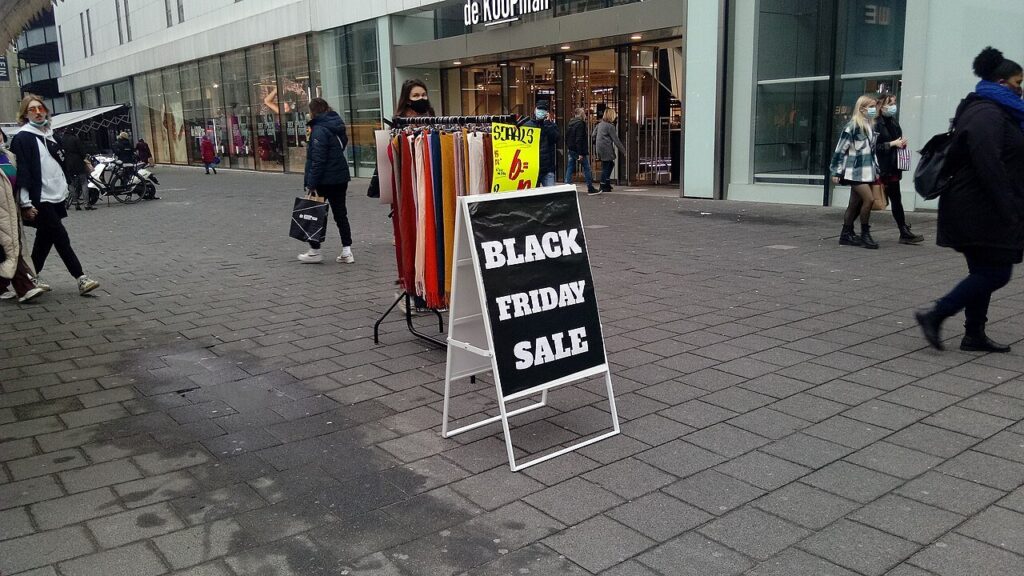
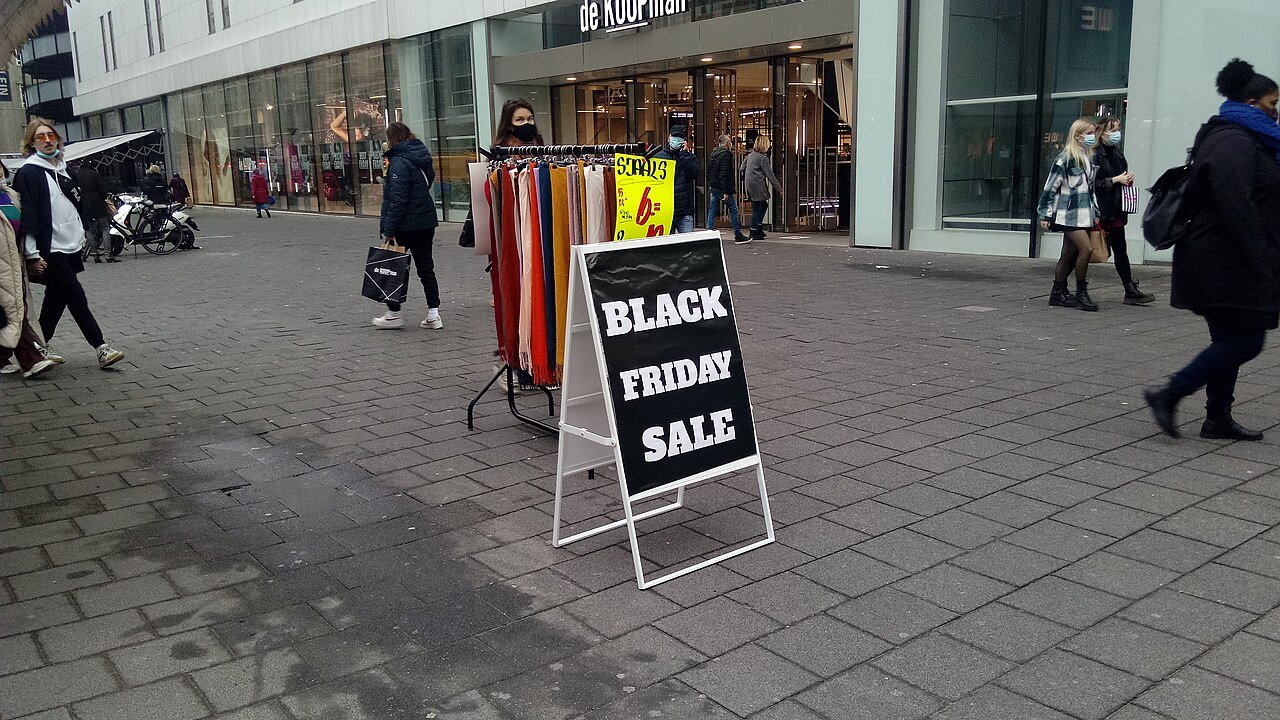
Featured photo: “Black Friday Sale sign, Rotterdam-Centrum, Rotterdam (2020)” by Donald Trung Quoc Don, licensed under CC BY-SA 4.0, via Wikimedia Commons (resized).