Daylight saving time ends at 2 a.m. on Sunday, Nov. 1, 2026, in most of the U.S., while U.K. clocks go back on Oct. 25. Here’s what to reset, which places don’t change, the tricky week in between, and where the Sunshine Protection Act stands.


 Kara
Daylight saving time ends in most of the U.S. at 2 a.m. local time on Sunday, November 1, 2026, when clocks move back one hour to 1 a.m. If you’re in the U.K. or most of Europe, your change comes a week earlier: clocks go back on Sunday, October 25. Congress has not changed the law this year, so the twice-a-year switch is still on. Here’s what to set, what changes on its own, and why the week between the two changes can trip you up.
Under current federal rules, daylight saving time begins on the second Sunday in March and ends on the first Sunday in November. According to the National Institute of Standards and Technology (NIST), daylight saving time in 2026 runs from March 8 to 2 a.m. local time on November 1. At that moment the clock reads 1 a.m. again, so the hour between 1 a.m. and 2 a.m. happens twice and you get an extra hour that night.
The switch applies in 48 states. Hawaii and most of Arizona stay on standard time all year and won’t change their clocks, and neither will American Samoa, Guam, the Northern Mariana Islands, Puerto Rico or the U.S. Virgin Islands, according to timeanddate.com. One exception inside Arizona: the Navajo Nation does observe daylight saving time. If you’re also following the election, here’s when midterm election results will be known.
In the U.K., the clocks go back 1 hour at 2 a.m. on the last Sunday in October, which this year is October 25, the U.K. government confirms. That ends British Summer Time and puts the country back on Greenwich Mean Time. Most of Europe changes on the same day.
Canadians in areas that still switch clocks will fall back at 2 a.m. on November 1, the same as the U.S. But several provinces and territories have moved to permanent time. Timeanddate.com reports that Yukon adopted permanent time in 2020, British Columbia announced in March 2026 that it would stay on permanent daylight time, Alberta’s new Official Time Act took effect in June 2026, and Manitoba will also not set its clocks back on November 1. If you live in or deal with western Canada, double-check the local rule before you assume anything.
Because Europe falls back a week before North America, the usual time gaps shrink by an hour for seven days. Between October 25 and November 1, New York is 4 hours behind London instead of 5, and Los Angeles is 7 hours behind instead of 8.
That matters if you have calls, flights or live events that cross the Atlantic that week. A standing 9 a.m. New York meeting with a London team, for example, lands at 1 p.m. in London instead of 2 p.m. It also affects anyone overseas following U.S. events live, like Apple’s October 28 event or NBA opening-week games. Calendar apps usually handle this correctly if every invite has a time zone attached, but recurring meetings typed in by hand are where mistakes slip in.
Not yet. The House of Representatives passed the Sunshine Protection Act (H.R. 139) on July 14, 2026, by a vote of 308 to 117, according to Congress.gov. The bill would make daylight saving time permanent. It was sent to the Senate on July 15 and referred to the Senate Commerce, Science and Transportation Committee, where it still sits. It has not passed the Senate or been signed into law, so the November 1 change goes ahead as normal.
The bill has supporters and critics on both sides. President Donald Trump supports making daylight saving time permanent, timeanddate.com reports, while Senator Tom Cotton of Arkansas has argued that year-round daylight time “would push winter sunrises to an absurdly late hour.” If the bill did become law, states that already skip daylight saving time, like Hawaii and most of Arizona, would not be forced to adopt it.
Falling back moves an hour of daylight from the evening to the morning. In practice, mornings get a little brighter and sunsets arrive about an hour earlier on the clock starting November 1. For many people that means driving or walking home in the dark for the first time since spring. If your trip home is long, it’s worth reading up on how commuting time affects day-to-day happiness before winter sets in.
Daylight saving time returns on Sunday, March 14, 2027, in the U.S. and the parts of Canada that still switch, and on March 28, 2027, in the U.K. and most of Europe, according to timeanddate.com, Live Science and the U.K. government.
You gain one. Clocks go from 2 a.m. back to 1 a.m., so that night is an hour longer. The easy way to remember it is “spring forward, fall back.”
At 2 a.m. local time on Sunday, November 1, 2026. Each time zone changes at its own 2 a.m.
At 2 a.m. on Sunday, October 25, 2026, when British Summer Time ends.
Hawaii and most of Arizona (except the Navajo Nation) stay on standard time year-round, along with U.S. territories including Puerto Rico and Guam.
No. The Sunshine Protection Act passed the House in July 2026, but it hasn’t passed the Senate, so nothing changes for this year’s switch.
March 14, 2027, in the U.S., and March 28, 2027, in the U.K.
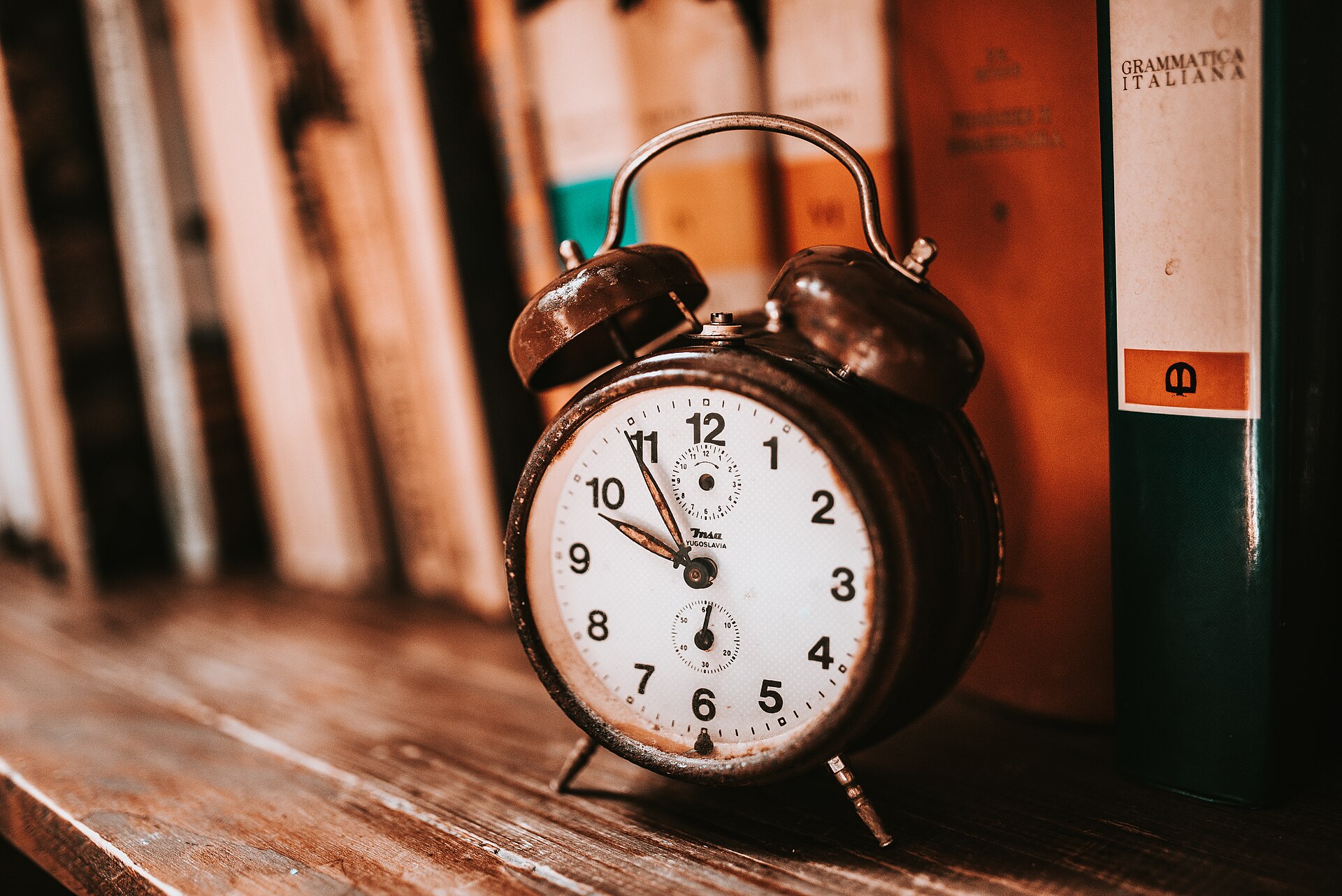
Featured photo: “Old alarm clock on the bookshelf” by Nenad Stojkovic, via Wikimedia Commons, licensed under CC BY 2.0.