The Fed held rates at 3.75%-4.00% on Oct. 28, 2026, in a 10-2 vote, with two officials wanting a hike. Here’s what it means for credit cards, mortgages and savings, and what to watch before December.

 Kara
Update, Oct. 28, 2026: The Federal Reserve held rates steady. It kept its benchmark federal funds rate at 3.75% to 4.00% (about 3.9%), as most economists expected, according to the Fed’s official statement. Here is what happened, what it means for your credit card, mortgage and savings, and what to watch before the next meeting on Dec. 8–9.
What it means for you right now: no new Fed-driven increase on variable credit card rates this month, savings yields should stay near current levels, and fixed mortgage rates will keep following bond yields rather than this decision. The two dissents are a sign that a December hike is still on the table, so the advice below still applies.
Our original preview, published before the decision, follows below.
The Federal Reserve wraps up its October policy meeting on Wednesday, Oct. 28, 2026, and the big question is simple: will it raise interest rates again? The short answer is probably not this week. Most economists and traders expect the Fed to hold its benchmark rate at 3.75% to 4.00%, then raise it by a quarter point in December. Here is why, and what each outcome would mean for your credit card, mortgage and savings. For a look at the next big event on the calendar, see when 2026 midterm election results are expected.
The Federal Open Market Committee (FOMC), the Fed’s rate-setting group, meets Oct. 27–28, according to the Fed’s meeting calendar. The policy statement comes out on the afternoon of Oct. 28 (the Fed typically publishes it at 2 p.m. ET), followed by a news conference with Fed Chair Kevin Warsh. The meeting after this one is scheduled for Dec. 8–9. For how the midterm results could affect tariffs, taxes and rates, see what the 2026 midterm results mean for your money.
This is also the Fed’s last meeting before the Nov. 3 midterm elections, which is part of why it is getting so much attention.
In September, the Fed voted unanimously to raise its target range by a quarter point to 3.75%–4.00%, its first increase in about three years, as USA Today reports. That move pushed the bank prime rate, which many credit cards and home equity lines are tied to, up to 7.00%.
The reason is inflation. The Bureau of Labor Statistics says consumer prices rose 3.7% in the 12 months through September, up from 3.4% in August. Gasoline alone jumped 9.1% in September and accounted for more than half of the monthly increase, while the energy index is up 20.4% over the year. (If you have felt that at the pump, our explainer on why gas prices are so high this October breaks down what is driving it.) “Core” inflation, which strips out food and energy, rose 2.6% over the year. All of these are above the Fed’s 2% target.
Nearly everyone watching the Fed expects a hold this week:
Rate changes take months to work through the economy, so waiting gives officials time to see how September’s hike is landing. The war with Iran is another big unknown, because any escalation or de-escalation could swing energy prices, and with them inflation. For the latest on fuel costs, read our update on falling oil and gas prices in November 2026.
A surprise is not impossible. At the September meeting, 12 of the policymakers who submitted projections saw room for one more quarter-point hike this year, four saw room for two (or one half-point move), and only two saw no need for more, according to USA Today. And inflation has picked up since then.
Some officials have been blunt. Cleveland Fed President Beth Hammack warned on Oct. 12 that “with each passing month, persistently elevated inflation raises the risks of an inflationary mindset becoming entrenched in the economy.” Chair Warsh, speaking in Bangkok on Oct. 16, said it was “hard to be in a discussion with central bankers and not compare notes and hear the same thing about the surge in prices.”
So the debate is less about whether rates rise again and more about when: this week or in December.
Most credit cards have a variable rate equal to the prime rate plus a margin, so Fed moves flow almost straight through. According to BestMoney, banks charged an average 22.36% APR on accounts that paid interest in August (based on preliminary Fed data collected before the September hike), and APR changes usually show up within one or two billing cycles after prime moves. If you want help reviewing card spending without moving any money, how Claude Personal Finance links banks via Plaid.
In dollar terms, a single quarter-point increase is small: BestMoney estimates about $1.04 more a month on a $5,000 balance. The bigger cost is the balance itself, so paying it down does far more than any Fed decision will.
Fixed mortgage rates do not follow the Fed directly. They track longer-term bond yields, especially the 10-year Treasury, which was around 5.00% on Oct. 23. Freddie Mac’s weekly survey put the average 30-year fixed rate at 7.32% on Oct. 22, down slightly from 7.40% a week earlier, with the 15-year at 6.68%, per Fed Gazette’s weekly recap.
That means a “hold” this week will not automatically make mortgages cheaper. What matters more is how bond markets react to the Fed’s tone and to inflation news. Adjustable-rate mortgages and home equity lines of credit (HELOCs), on the other hand, are often tied to short-term rates and can rise after a hike.
Savers are the one group benefiting. A study by YourBest of more than 2,200 deposit products found the median high-yield savings rate rose from 3.35% to 3.48% APY between Oct. 1 and Oct. 25, and the median 12-month CD climbed to 3.80%. Meanwhile, the FDIC’s national average for a regular savings account is just 0.38%, as the Wall Street Journal notes, with top high-yield offers reaching about 5%.
High-yield savings rates are variable, so they tend to rise after a hike. CDs lock in a fixed rate for a set term, which some savers like as protection against future cuts, though you give up access to the money. Which suits you depends on when you will need the cash.
Auto loans and personal loans are usually fixed once you sign, so this week’s decision will not change an existing loan. New loans, though, are priced off current market rates, and a December hike could nudge them higher. The University of Michigan’s latest survey found that buying conditions for big-ticket items fell sharply this month because of higher interest rates and affordability worries, according to the Institute for Social Research.
This article is general information, not personal financial advice. Rates and forecasts can change quickly.
Several reports will shape the Fed’s December decision, according to Investlane and the Fed Gazette calendar:
The Fed typically releases its policy statement at 2 p.m. ET on the final day of the meeting, with the chair’s news conference about half an hour later.
No. On Oct. 28 the Fed held its target range at 3.75%–4.00% in a 10–2 vote, with two officials preferring a quarter-point hike. Its next meeting is Dec. 8–9.
Not necessarily. Fixed mortgage rates follow longer-term Treasury yields, which react to inflation and economic news more than to a single Fed meeting.
Not because of the October meeting, since the Fed held rates. If it hikes in December, most variable-rate cards would rise by about 0.25 percentage points within one or two billing cycles.
Savings and CD yields have been rising this month. Whether a flexible savings account or a fixed-rate CD fits better depends on when you will need the money.
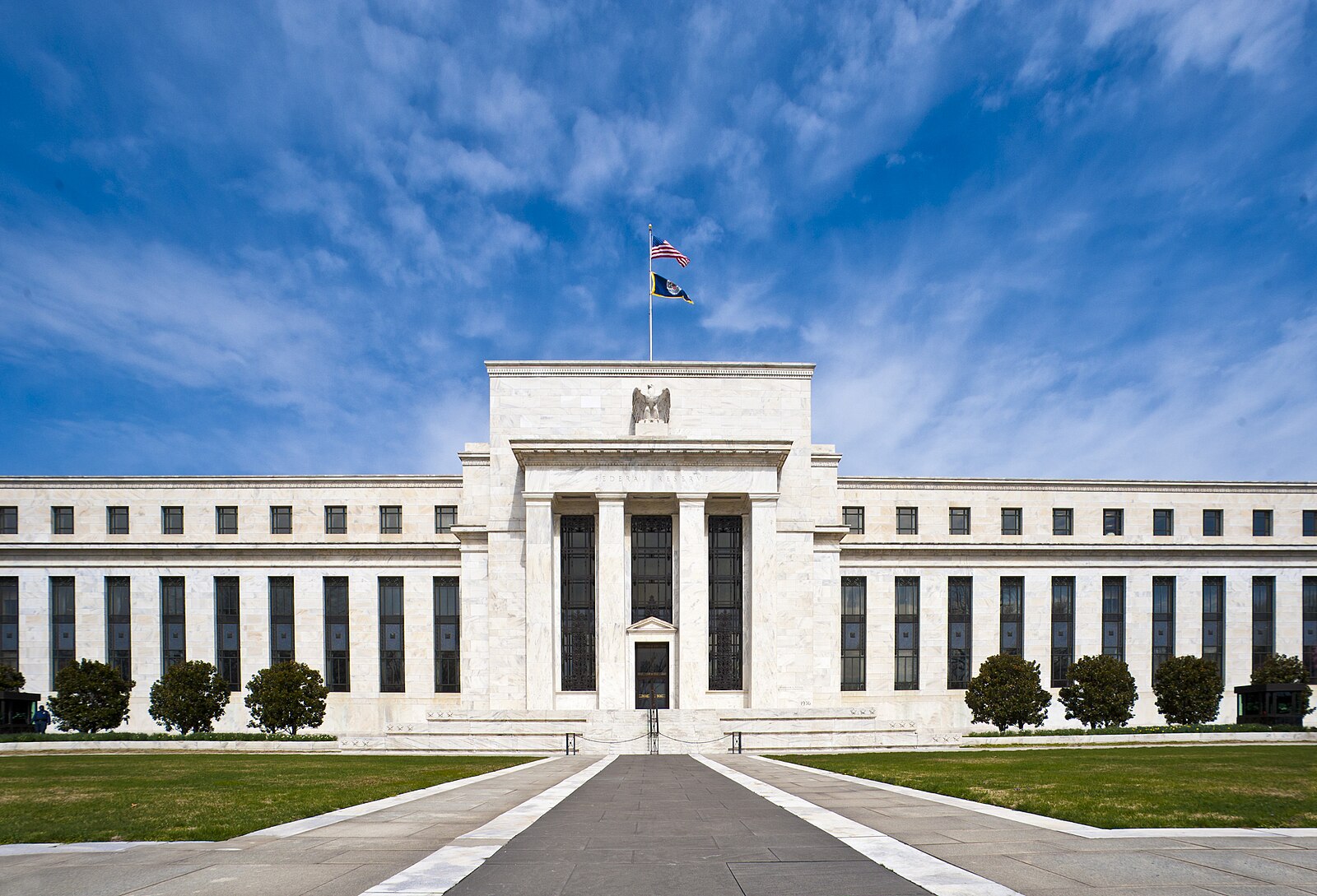
Featured image: Marriner S. Eccles Federal Reserve Board Building, Washington, D.C. Photo by the Federal Reserve via Wikimedia Commons (public domain).